Roofing Services
Roof Coatings
Silicone, acrylic, asphalt emulsion, and aluminum coatings to protect and extend the life of your roof.
What This Service Covers
Coating Systems We Apply
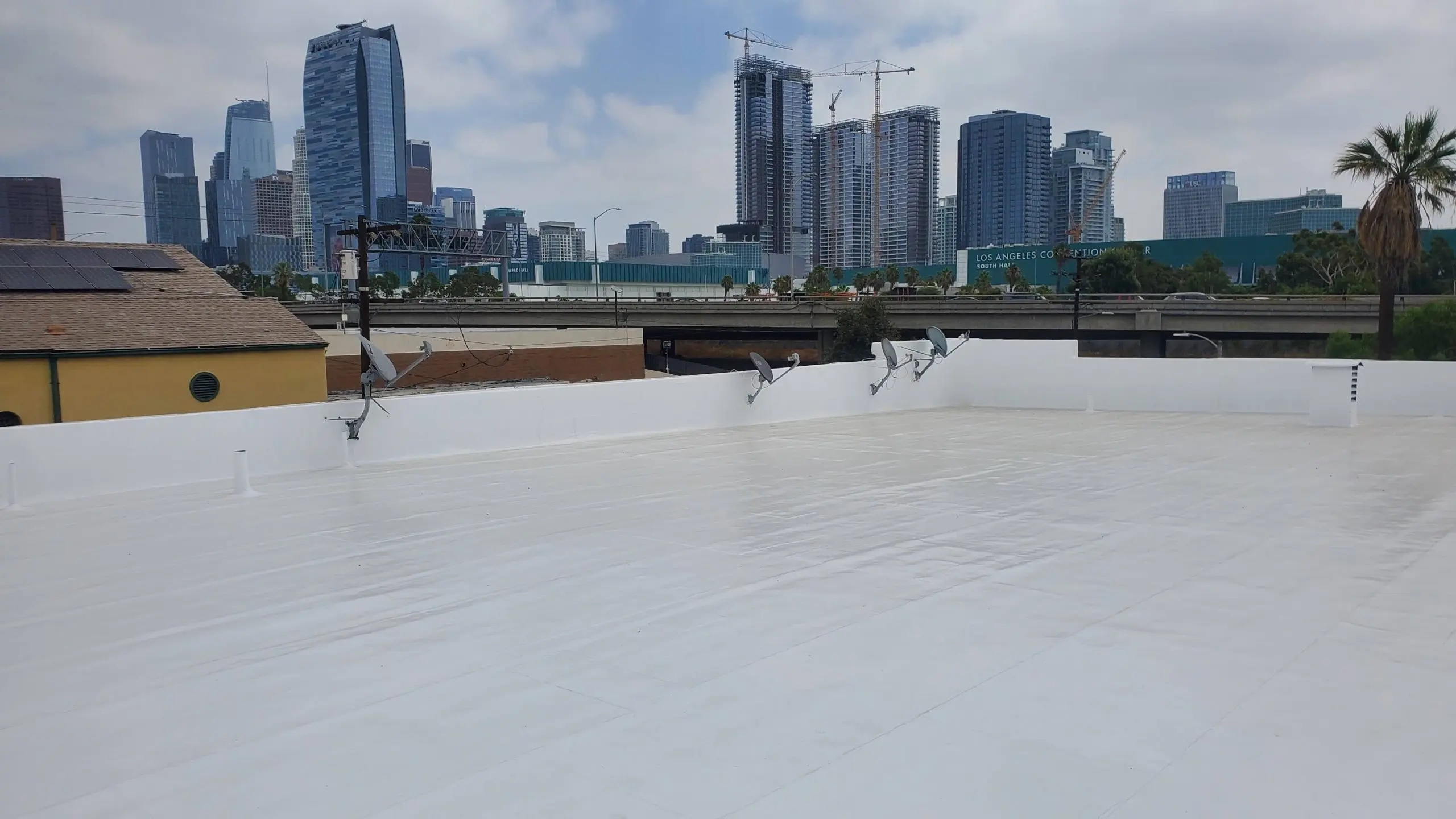
Roof coatings are a maintenance and protection system applied over an existing roof surface, not a replacement roof. We work with four coating types, each suited to different roof conditions: silicone coatings for flat or low-slope roofs prone to ponding water, acrylic coatings for general reflective maintenance on sloped and low-slope roofs, asphalt emulsion coatings for built-up and modified bitumen roofs, and aluminum coatings, a proven, budget-friendly reflective finish.
Choosing the right system comes down to your roof's substrate, its slope, how much sun exposure it gets, and whether it holds water anywhere. Our coating work uses CRRC-rated products, meaning the Cool Roof Rating Council has independently verified the product's solar reflectance and thermal emittance — which is often what makes a coated roof count toward Title 24 energy code compliance on a permitted re-roof or renovation.
Key Benefits
- Silicone, acrylic, asphalt emulsion, and aluminum options
- CRRC-rated products
- Extends the life of an existing roof
- Helps with Title 24 compliance
- Cost-effective alternative to a full tear-off
Why It Matters
When a Coating Makes Sense
- Your roof is structurally sound but showing UV wear, chalking, or fading
- You want to extend the life of an existing roof without a full tear-off
- Your flat roof has areas where water sits after it rains
- You're trying to reduce heat buildup in a building with a dark or bare roof
- Your project needs to meet Title 24 requirements and a coating is the most direct path to compliance
Our Process
How a Coating Job Works
- Roof evaluation — checking substrate condition, ponding areas, and existing coating or membrane type.
- Coating recommendation — matching the roof to silicone, acrylic, asphalt emulsion, or aluminum based on what it actually needs.
- Surface prep — cleaning, repairing any active leaks first, and priming where needed.
- Application — coating applied in the manufacturer-specified thickness and number of coats.
- Documentation — CRRC product information provided for your records or permit file.