Roofing Services
Torch Down
Modified bitumen roofing torch-applied for durable, watertight flat and low-slope roofs.
What This Service Covers
Torch Down Roofing Services
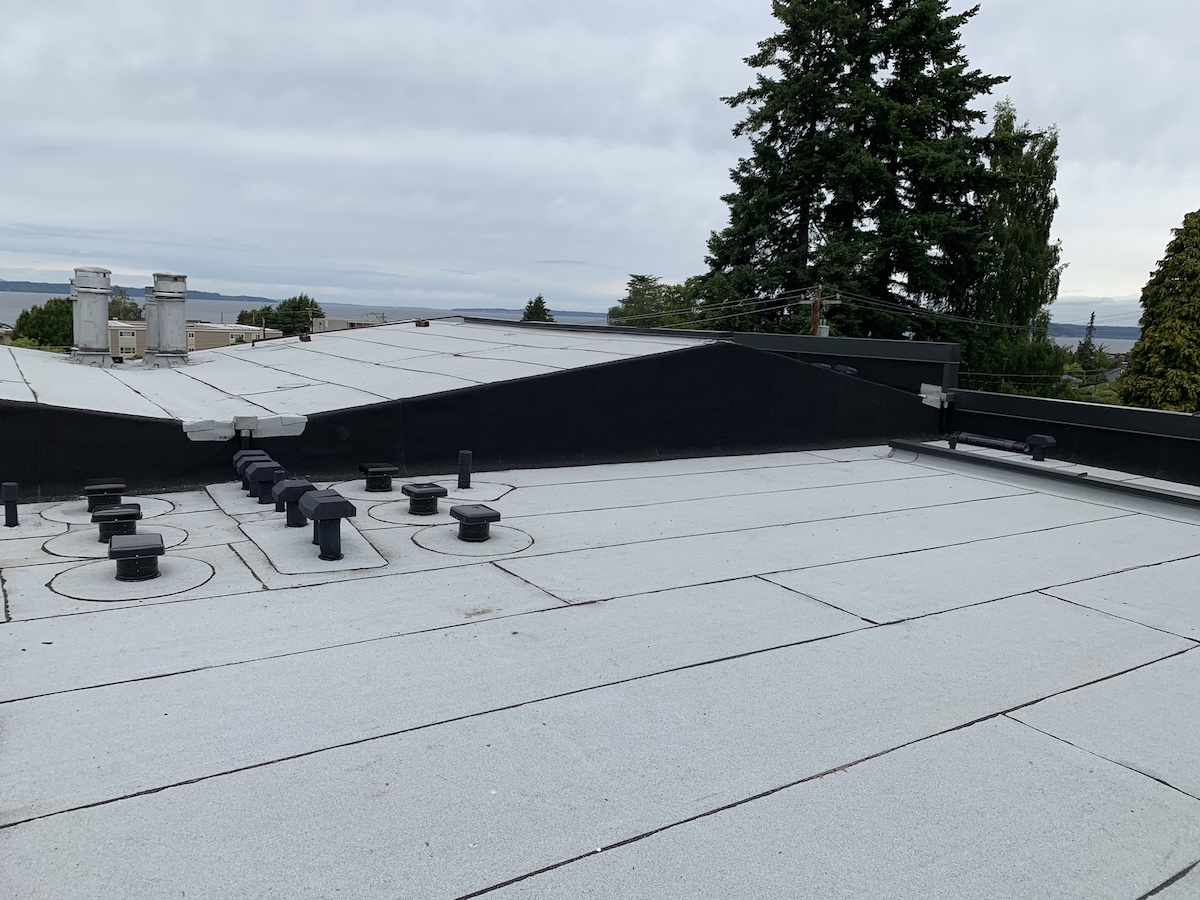
Torch down roofing is a modified bitumen roofing system typically used on flat or low-slope roofs where traditional shingles aren't practical. It's installed in rolled sheets that are heated with a propane torch, which melts the asphalt layer and fuses the material directly to the roof surface — or to a base layer already installed — to create a fully bonded, seamless membrane.
We install torch down systems in multiple layers, typically a base sheet followed by a cap sheet, with seams overlapped and torched to fuse them into a single continuous surface. This layered, fused approach is what gives torch down roofing its strong resistance to water intrusion, and it can be finished with a reflective cap sheet or coating to help with heat and UV exposure.
Key Benefits
- Fully fused, seamless membrane
- Multi-layer base and cap sheet system
- Built for flat and low-slope roofs
- Strong resistance to water intrusion
- Can be finished with a reflective coating
Why It Matters
When Torch Down Makes Sense
- You have a flat or low-slope section of roof where standard shingles won't perform well
- Your current flat roof is showing blistering, cracking, or seam separation
- You're seeing ponding water that isn't draining properly
- You're adding on to a home or building a flat-roof structure and need a roofing system suited to it
- Your existing built-up or modified bitumen roof is at the end of its service life
Our Process
How a Torch Down Job Works
- Inspection — checking the deck, drainage, and condition of any existing roofing.
- Prep — removing failing material and repairing the deck where needed.
- Base sheet installation — the first modified bitumen layer, torched into place.
- Cap sheet installation — the top layer, overlapped and torched to fully seal all seams.
- Detail work — flashing at edges, penetrations, and transitions to keep water out at the vulnerable points.
- Final inspection — checking every seam is fully fused before we call the job done.